


UK Vape Tax 2026: How the New Duty Will Change E-Liquid Prices

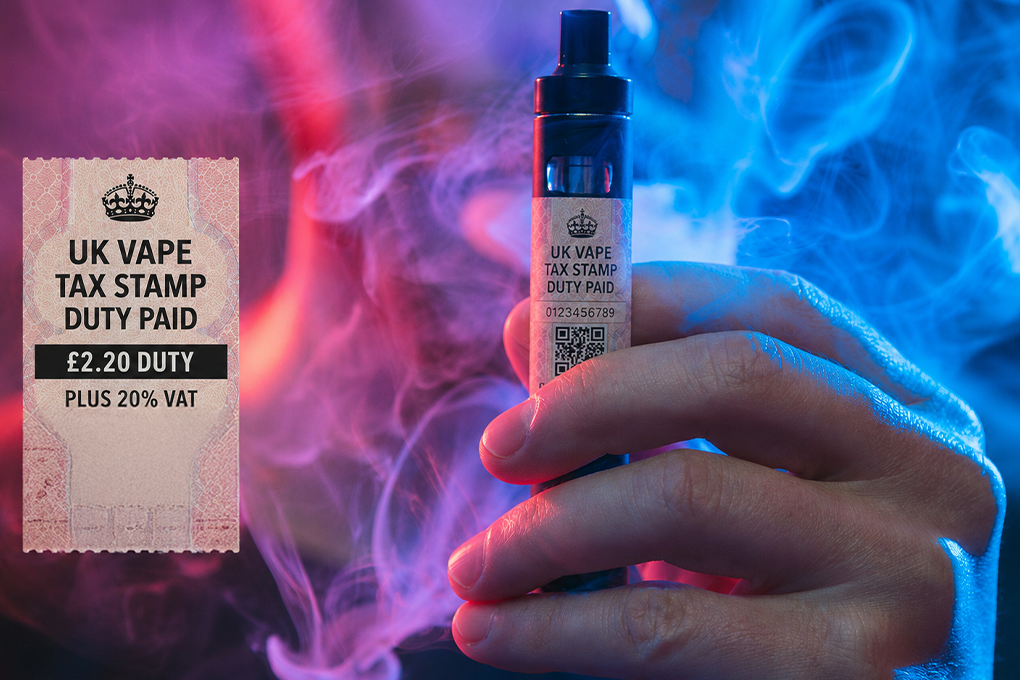
From 1 October 2026, every bottle of vape liquid sold in the UK will carry a new excise duty. The change has been confirmed by HM Revenue & Customs and will affect the price of nicotine salts, freebase e-liquids, shortfills, nic shots, prefilled pods and refillable bar formats.
This guide explains what the new Vaping Products Duty is, how much it costs, which products are affected, and what UK vapers can expect when prices begin to change.
Quick summary: what you need to know
- Name of the tax: Vaping Products Duty (VPD)
- Start date: 1 October 2026
- Rate: £0.22 per ml — equivalent to £2.20 per 10ml bottle
- VAT: 20% applied on top of the duty
- Applies to: All e-liquid sold in the UK, including 0mg (nicotine-free) products
- Does not apply to: Vape devices, coils, batteries or other hardware
- Duty stamps: Required on retail packaging from 1 October 2026
- Sell-through period: Older unstamped stock can be sold until 31 March 2027
- Administered by: HM Revenue & Customs (HMRC)
What is the Vaping Products Duty?
The UK Government introduced the Vaping Products Duty (VPD) as part of the Tobacco and Vapes Act, which became law on 29 April 2026. First announced at Spring Budget 2024 and later confirmed at Autumn Budget 2024, the new duty will officially take effect on 1 October 2026.
Under the new system, vape liquid will be taxed in much the same way as tobacco and alcohol. Once businesses pay the duty, products must display a physical Vaping Duty Stamp on their retail packaging — clearly showing that the correct tax has been paid and that the product is legitimate.
HM Revenue & Customs (HMRC) oversees and administers the scheme. From 1 April 2026, manufacturers, importers and warehousekeepers were able to begin applying for HMRC approval.
When does the UK vape tax start?
There are three key dates businesses and retailers need to know:
- 1 April 2026: HMRC began accepting applications for manufacturer, importer and warehousekeeper approval.
- 1 October 2026: Vaping Products Duty officially takes effect. From this date, all e-liquid produced or imported into the UK must be duty-paid and carry a vaping duty stamp.
- 1 April 2027: The sell-through period ends. From this date onwards, selling vape liquid in the UK without a valid duty stamp becomes an offence.
In the meantime, retailers may continue selling older stock manufactured before the duty came into force between 1 October 2026 and 31 March 2027, even if the products remain unstamped. However, once the grace period ends, all unstamped stock must be removed from sale.
How much is the new vape duty?
The Government has set the duty at a flat rate of £0.22 per millilitre of vape liquid — equivalent to £2.20 on a standard 10ml bottle. On top of that, 20% VAT will also apply.
Crucially, the rate does not vary based on nicotine strength. Whether the product is a 0mg shortfill, a 10mg freebase or a 20mg nicotine salt, the same rate applies per millilitre. In other words, VPD is a volume-based tax: the total amount of liquid determines the duty owed, not the ingredients or nicotine content.
Example duty calculations
| Product format | Liquid volume | Duty added | VAT on duty | Total tax added |
|---|---|---|---|---|
| 2ml prefilled pod | 2ml | £0.44 | £0.09 | £0.53 |
| 10ml nic salt bottle | 10ml | £2.20 | £0.44 | £2.64 |
| 10ml freebase bottle | 10ml | £2.20 | £0.44 | £2.64 |
| 2 + 10ml bar format | 12ml | £2.64 | £0.53 | £3.17 |
| 50ml shortfill | 50ml | £11.00 | £2.20 | £13.20 |
| 100ml shortfill | 100ml | £22.00 | £4.40 | £26.40 |
| 120ml shortfill | 120ml | £26.40 | £5.28 | £31.68 |
These figures show the additional cost on top of the current pre-duty price. Final retail prices will also reflect changes to packaging, duty-stamp handling and supply-chain compliance costs.
How is Ultimate Juice preparing?
Ultimate Juice is a UK-based e-liquid manufacturer operating two production sites in Coventry, with three bottling lines producing around 840,000 bottles of nicotine salt, freebase, shortfill and nicotine shot products each week.
As a registered UK manufacturer, Ultimate Juice has applied for HMRC approval under the Vaping Products Duty and Vaping Duty Stamps Scheme, and is preparing its production, packaging and supply chain processes to meet the 1 October 2026 deadline. Customers and retail partners will see Vaping Duty Stamps on Ultimate Juice retail packaging from that date.
What should UK vapers do?
For now, the main thing is to stay informed as further HMRC guidance is published.
- Refillable systems remain the most cost-effective option. Hardware is not taxed, and refillable pod kits paired with 10ml bottles continue to offer the lowest pence-per-ml cost.
- Plan your budget. If you use a 10ml bottle every couple of days, expect to roughly double your monthly e-liquid spend from October 2026.
- Buy from approved suppliers. From October 2026, look for the vaping duty stamp on retail packaging. Unstamped product sold after 31 March 2027 will be illegal.
- Vaping remains cheaper than smoking. Even after the duty, the typical annual cost of vaping is a fraction of the equivalent cost in combustible tobacco.
Frequently asked questions
When does the UK vape tax start?
The Vaping Products Duty takes effect on 1 October 2026.
How much is the new vape duty?
£0.22 per ml of vape liquid, equivalent to £2.20 per 10ml. VAT at 20% is then applied on top of the duty.
Does the duty apply to 0mg (nicotine-free) e-liquid?
Yes. The duty applies to any liquid designed to be vaped, regardless of nicotine content.
Are vape devices taxed?
No. The duty applies only to liquid. Refillable pod kits, coils, batteries and other hardware remain subject to standard 20% VAT.
Can I still buy untaxed e-liquid after 1 October 2026?
Older stock manufactured before 1 October 2026 can be sold without a duty stamp until 31 March 2027. From 1 April 2027, all e-liquid sold in the UK must carry a valid duty stamp.
How much more will a 100ml shortfill cost?
A 100ml shortfill will carry £22 of duty plus £4.40 of VAT — an additional £26.40 on top of the current retail price, before any change to underlying product costs.
What is a Vaping Duty Stamp?
A physical mark applied to retail packaging confirming the duty has been paid. It is required on all vape liquid sold in the UK from 1 October 2026, with a sell-through period for older stock running to 31 March 2027.
Where can I read the official HMRC guidance?
The latest guidance is published on GOV.UK — search for “Vaping Products Duty” or “Vaping Duty Stamps Scheme”.
Sources
- HM Revenue & Customs — Vaping Products Duty and Vaping Duty Stamps Scheme guidance (GOV.UK)
- HM Treasury — Spring Budget 2024 and Autumn Budget 2024
- HMRC press notice (1 April 2026) — applications open for manufacturer, importer and warehousekeeper approval
- Tobacco and Vapes Act 2026


 Blue Raspberry
 Sweets
 Cold
Cold Tropical
 Ice Cream
 Bubble Gum
 Mixed Fruits
 Vape Kits

